Sunday, February 23, 2020

New Zealand - The Milford Track

The Milford Track is one of New Zealand's Great Walks. Kevin hiked it more than twenty years ago on his first trip to New Zealand and it has always been something we have wanted to go back and do together. We had booked a guided trip with Ultimate Hikes but over the holidays the south island experienced some heavy rains and terrible landslides that wiped out roads and part of the track itself. The NZ government shut down several of the popular hiking trails in the Fjordland national park and Ultimate Hikes had canceled several groups in the weeks prior to our scheduled departure. We were worried we wouldn't be able to see any of Fjordland or Milford Sound on this trip! Luckily the New Zealand Department of Conservation and Ultimate Hikes worked tirelessly to come up with a plan that would allow hikes to continue with a shortened last day (to avoid dangerous sections of the trail). We were fortunate that our group was the third group allowed back onto the track.


Click here for a short video documenting our Milford Track hike.

Day ONE: Queenstown -> Te Anau -> Glade House (1 mile hiked)

We boarded a bus with our fellow hikers and soon-to-be friends, and enjoyed a relaxing and scenic two hour bus ride to Te Anau, where we stopped for lunch. So much pastureland! So many sheep!


At Te Anau Downs, we boarded a boat to get to the trailhead. The Milford Track is a one-way trail, because it is a multi-overnight hike and you need to have reservations for sleeping in the lodges (no back country camping permitted off-trail). The only way to get to the start of the hike is by taking a boat across the entire length of Lake Te Anau.


They start you off very easy on the first day -- it is only one mile from the trailhead to the first lodge. We had a really nice leisurely walk in the forest before arriving at Glade House.


What a location! The lodge was nestled in the middle of the wilderness beside the Clinton River. Our room was more luxurious than we expected. In fact, all of the lodges that are run by Ultimate Hikes are really comfortable, especially considering that they have to bring all the supplies in by foot or by helicopter.


We gathered with all our fellow hikers for a briefing of what to expect on Day 2, followed by a delicious meal and drinks from the bar.


After dinner, Kevin was able to find his signature in the 1997 guestbook from his first time on the Milford Track. We had an hour or so to socialize with the other hikers until lights out at 10pm. Literally. The power for all the rooms is run by a generator that is shut off nightly, so we made sure to be safely tucked in by then.


Day TWO: Glade House -> Pompolona Lodge (10 miles hiked)

After breakfast and packing our lunches (if you've never had a Whittaker's chocolate, they are a MUST for a trail lunch treat), we got an early start and crossed the river via suspension bridge. Now we were really on our way!


The terrain was pretty flat and once we all got going it was almost as though Kevin and I were hiking completely alone in the wilderness. We would occasionally pass or be passed by other hikers in the group, and our wonderful guides were spaced evenly through the group so that they could answer questions or take photos.


The first section of the track was so green - towering trees with lots of ferns and moss. It was so different from the scenery we see while hiking in Arizona!


Later in the day the valley opened up and we could see more mountains and even some rivulets of waterfalls.


At the lodge we were treated to an impromptu talent show organized by one of our fellow hikers. Our guide Mitch stole the show with an original (and hilarious) composition about a romance that didn't work out because of dietary restrictions.


Day THREE: Pompolona Lodge -> Quintin Lodge (9 miles hiked, over Mackinnon Pass)

We knew we were in for a long day when we woke up to a very steady drizzle of rain. Luckily we had packed appropriately and layered on rain pants and jackets over warm wool clothes. Unluckily we had to stomp through several tiny streams making for very wet feet right at the start of the day.


At least there is one benefit of a lot of rain: we were able to really take in the beauty of the waterfalls as we made our way up the steep slope to Mackinnon Pass.


The steep incline to the pass was for sure the toughest part of the hike. There were lots of switchbacks and over 1500 feet of vertical gain. The trail was well-maintained though, so it was definitely challenging but do-able. Just as we approached the pass, the fog started rolling in and it turned from a light drizzle into gusty and cold winds. We were glad to get into the shelter near the top of the pass to have lunch and warm back up!


We made it back down the other side of the pass, and arrived at Quintin Lodge after a short detour hike to Sutherland Falls, New Zealand's tallest waterfall.


Day FOUR: Quintin Lodge -> Mitre Peak Lodge (6 miles hiked)
Day four would normally have been the longest day of hiking -- 13.5 miles -- but because of damage to the track we would only hike to the Boatshed, about 6 miles of hiking. The morning was misty and drizzly, and it made for some slippery hiking through the ferns. We were glad to have hiking poles in many places.


We were disappointed that we had to cut the hike short and miss out on some of the sights along the last miles of the track, but a helicopter ride from the Boatshed into Milford Sound more than made up for our disappointment.


Kevin and I were in the first group to arrive at the lodge, so we had time to take a quick hike to a viewpoint of Milford Sound.


Mitre Peak Lodge itself was in a stunning location with great views of the sound. Because the road into Milford Sound was closed to tourists, we were the only group staying overnight in the village. It was very relaxing although I'm sure during the height of tourist season, it would normally have been bustling with activity.


Our last night in the lodge was a lot of fun -- we played a custom board game developed by some of the other hikers, and we shared a few drinks with our excellent guides - Sophie, Lara, Kiel, and Mitch -- who had really gone above and beyond to make our hike safe and enjoyable.


Day FIVE: Milford Sound -> Queenstown (NO hiking!)

The next morning we joined the rest of the group on a cruise of Milford Sound.


The boat got us right up close to some of the spectacular waterfalls only accessible by water.


A very tired group of us piled into the bus for the four-hour bus ride back to Queenstown. It was truly worth coming all the way to New Zealand just to do this memorable hike.


Monday, February 17, 2020

New Zealand - Queenstown

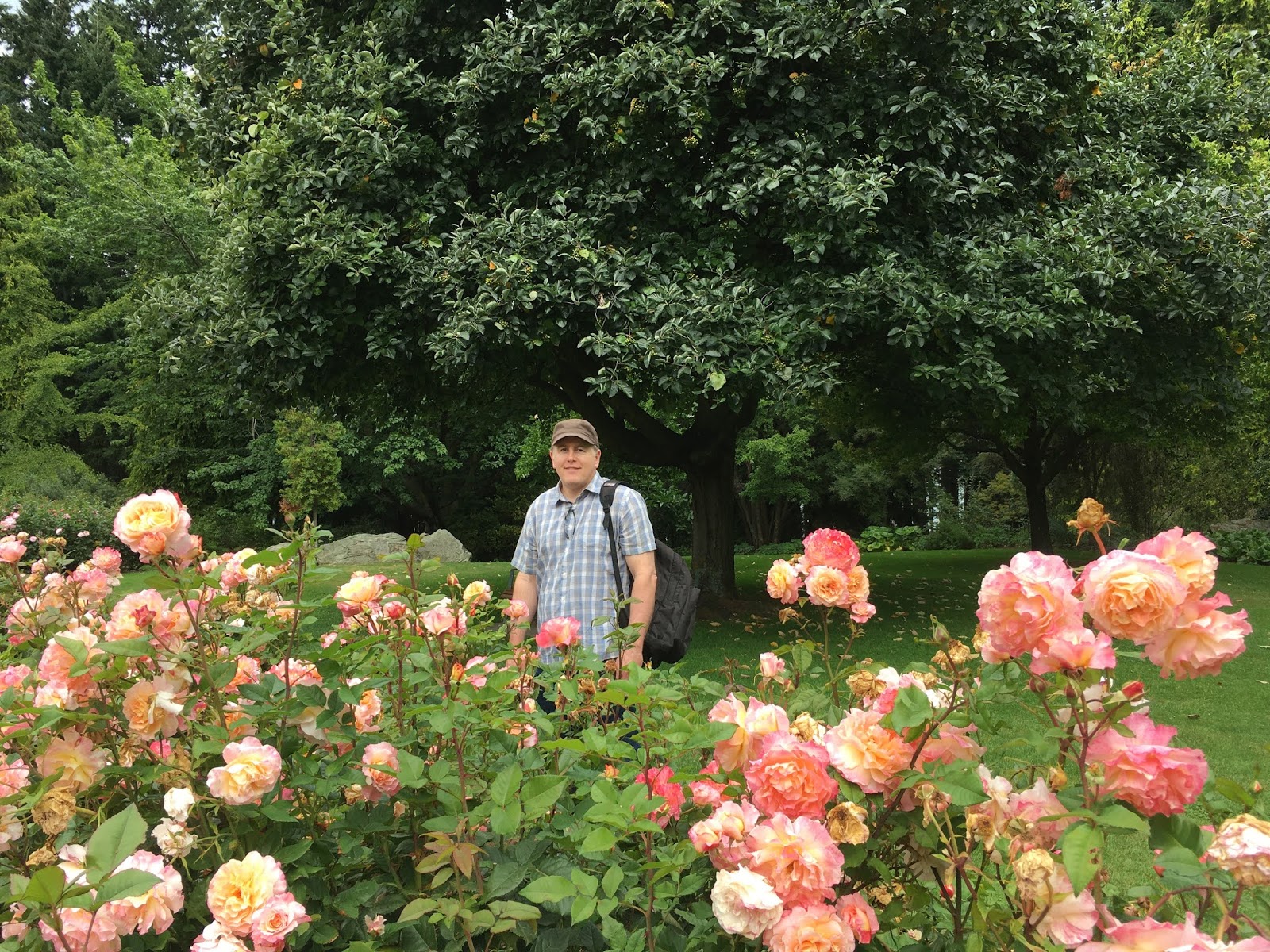
New Zealand, finally! Twenty years ago, Kevin spent three weeks on the south island and has been raving about its natural beauty ever since. I always knew I wanted to see it someday and finally we are here. We arrived in Queenstown in the afternoon, giving us a little time to explore the town. The Queenstown Gardens is a large-scale botanical garden and park with miles of trails to explore beside the beautiful Lake Wakatipu.


After a good night's sleep we got an early start with a Wilderness Jet boat tour into Mount Aspiring National Park. We booked a half-day tour through Dart River Adventures.


A bus ride took us up to the town of Glenorchy, where we started off with a temperate rainforest walk, which was peaceful and tranquil compared to the heart-pounding jet boat ride that followed.


Jetboats are propelled by rapidly drawing water in and expelling it out the back of the boat, rather than by using propellers -- it's more like a jetski than a "regular" boat. Because it doesn't have a propeller, a jetboat is great at navigating shallow waters at dizzying speeds. In our case, we went as fast as 60 miles per hour at our top speed on the Dart River, and our driver made it a point to do several quick 360-degree turns during our 50 minute ride. Exhilarating!


After a wild boating experience in the morning, we decided to do a more leisurely-paced boat excursion in the evening with a dinner cruise on the TSS Earnslaw. The Earnslaw is a steamship that was built in 1912 specifically to transport cargo to and from the sheep stations and outposts on Lake Wakatipu. Her cargo space had room for 1500 sheep and 30 head of cattle.


As road access improved in this part of New Zealand, the Earnslaw was needed less and less to transport livestock. Instead, in the late 60's she was refitted as a tourist attraction, ferrying passengers between the Queenstown dock and the Walter Peak station several times a day.


We took the evening dinner cruise, which arrived at Walter Peak homestead after a 45 minute lake cruise. We had a delicious buffet dinner, followed by a stroll in the nearby gardens and a sheep shearing and sheep herding demonstration.


The presentation about modern-day sheep farming was really interesting; New Zealand sheep are known for their high-quality merino wool. They are shorn either once or twice per year, depending on sheep breed and how fast their coat grows in. When they aren't in the paddock to be shorn, they roam free through the large hilly pastures around the station. Which is why the sheepdogs are needed to herd them together when it's time to be moved from one pasture to another, or if they need to be brought in to be shorn. It's fascinating to watch the dogs creep, stalk, and intimidate the sheep into going wherever they are supposed to go.


On the return trip at sundown, we all piled into the Earnslaw, ordered drinks from the bar, and a piano player passed out songbooks for an old-fashioned singalong. I've had the tune of "Waltzing Matilda" stuck in my head ever since!


The next morning, we were picked up by our enthusiastic guide Vicky for a wine-tasting tour in the Gibbston Valley.


We visited 3 wineries and had a wonderful lunch al fresco in the wine garden at Kinross. Our sommelier introduced us to some wonderful pairings as we ate delicious food in a beautiful setting.


We made it back to Queenstown in plenty of time to attend an information briefing for our four-day hike in the New Zealand back country. (More about that in our next post...) After the briefing, we took a quick trip up the Queenstown Skyline gondola to get some stunning views of the town and lake before heading back down into town to stand in a long line for a world-famous Fergburger for dinner.


Tuesday, April 16, 2019

Japan - Tokyo


With only a few days left in Japan we had to make the most of our time, so we took a very early train from Takayama to arrive in Tokyo by the early afternoon. First up was lunch and a couple of icy cold beers at the Ginza Lion, a 1930’s-era German-style beer hall with gorgeous art deco mosaic murals on the walls.


We then spent a few hours wandering the halls of the Tokyo National Museum before heading over to the Akihabara Electric Town area. This is a true nerd paradise, with shop after shop of comic books, video games, electronics, manga/anime costumes, and maid cafes. We went into this Sega video arcade were amazed by the size and scope. Each floor had a theme – prize games, music games, classic videogames, snapchat-filter-style photobooths, and virtual reality games. Very cool!


Our plan for Tokyo was to stay two nights at a hotel in Ginza, then two nights at one in Shinjuku so that we could explore each area without spending too much time on public transit. Since the Ginza hotel was within walking distance of the famous Tsukiji fish market, we made sure to head over there for lunch on our second morning. We had a delicious meal at the counter at Sushi Zanmai, then wandered through the market area to check out what else was on offer – tuna head or sea urchin, anyone?


After lunch we took the subway to Senso-ji Temple, the oldest temple in Tokyo. It is also one of the best places to people watch, because – believe me – there are a LOT of people to watch.


Throughout our time in Japan, we saw lots of tourists wearing brightly-colored kimonos and having their poor boyfriends take multiple photos of them for their Instagram.  These clever ladies went a step beyond and had what appeared to be a professional photographer taking multiple shots of all of them with the temple in the background.


The next morning we got an early check-in at our final hotel in Japan, the Park Hyatt. This is the same hotel that was featured in the Bill Murray movie “Lost in Translation”. It was a classy place. The mini-bar in our room was like a work of art…”for relaxing times, make it Suntory time”.


From the hotel, it was a quick walk through Yoyogi Park to get to the Harajuku district, which is known as a lively place where all the cool teenage kids hang out. The main attraction is the colorful and pedestrian-friendly Takeshita-dori street.


We braved the long lines to get ourselves one of these yummy crepes. They had so many options on the menu, you had to order what you wanted by number.


In the evening we took a guided walking tour through the Golden Gai nightlife area. Over 200 tiny ramshackle bars and pubs are crammed into an area the size of a soccer field. Some pubs had only enough seats for five people, but our guide took our group to one that had a luxurious 25 seats and a restroom – fancy!


On our last full day in Tokyo we headed to the coolest…museum? ...art exhibit? I’m not really sure how to categorize it, but teamLab Borderless was quite the experience.


The artists have created a multi-room space where guests can interact with the digital art. Some of the rooms had moving light projections, others had mazes with brightly lit features, giant balloons, mirrored reflections, or a combination of all of the above. It was definitely a colorful and surreal experience.


For our final evening in Japan we went for a nightcap and some jazz at the iconic New York Bar. The music was wonderful and the city views in the background were just spectacular. A great way to end the trip!


Thursday, April 11, 2019

Japan - Traditional Takayama


We took the very scenic Hida Wide Express train from Kyoto to the mountain town of Takayama. We had booked two nights at a ryokan, a traditional Japanese inn. Ryokans typically provide one or two meals, and usually have an onsen-style bath onsite. We thought it would be a good way to immerse ourselves in Japanese culture. At the main entrance to the inn, we exchanged our street shoes for house slippers and we were shown to our room.


As you can see, there was not much decoration in the room – the floor was covered with finely-woven straw tatami mats, there was a low table and some cushions to sit on, and not much else.  (In the alcove there were two western-style chairs and a mini-fridge. We ended up spending a surprising amount of time sitting in that tiny room). You might be wondering, where is the bed?  Yeah, we wondered that too. It turns out the bedding was all folded up in a cupboard near the room entrance. A two-person turndown team came around each night after dinner to set up the thin futon mattress on the floor. Then they came and put it away again each morning!


So the comfort level of the room itself left a little bit to be desired. But our primary reason for booking a ryokan was to try a traditional kaiseki dinner. The dinner is served in your room by your own personal maid/waitress who sets the table and brings the dishes in multiple courses, all very artistically arranged.


On its website, our ryokan boasts (proudly and repeatedly) that they "specialize in the local Hida beef”. Like Kobe beef, Hida beef comes from Japanese Wagyu cattle that are specifically bred for the fine quality of fat marbling throughout each cut.


Seated awkwardly on the floor, we actually cooked the beef course of each meal ourselves. (I guess we are the true Hida beef specialists now!) The first night it was shabu-shabu style -- thin strips of beef cooked quickly in boiling broth. The second night it was thicker slabs of beef barbecued on a tiny hibachi grill. Both meals were truly delicious. Kanpai to the chef!


However, the breakfast was not so delicious, to be honest. We both consider ourselves to be pretty adventurous eaters, and will try anything once. But rubbery seaweed and salted fish is just not what I typically crave when I think of breakfast food. It was a bit of an ordeal to get through all the dishes they served at breakfast. Hey, at least we got to sit in normal chairs though!


With our bellies full, we then set about exploring the town despite the rain. At least we didn't have to fight any crowds.


Takayama has a beautiful old town area, with traditional wooden buildings lining the main street and lots of boutique shops selling handicrafts, local foods, and even several sake vendors. Even in the rain it was a charming place.


On our second day in town, we explored the morning market followed by a walk to the Sakurayama Hachimangu shrine, the oldest shrine in Takayama.


Then we headed inside the Festival Float Exhibition Hall. Takayama is particularly famous for its Matsuri, a festival that takes place twice a year – in April and October.  They have held this festival for the past 350 years, culminating in a parade of gilded wooden floats that are manually carried or pulled through the streets.  (Some have wheels and some do not). Several of the floats have moveable marionettes that perform for the crowds.  Unfortunately we were visiting about a week too early to be able to see the Spring Festival, but we were happy to be able to see the floats on display at this excellent little museum.


Our final stop in Takayama was the Hida Folk Village (Hida No Sato). This is an outdoor museum displaying various regional architectural styles. More than 30 historical and culturally important buildings were moved to this location to preserve them for future generations.


Traditional architecture in the area includes farmhouses built in the Gassho style, having thick thatched roofs that are steeply pitched to withstand the weight of snowfall in this part of Japan. Inside, a large open hearth sunk into the middle of the floor provides heat and a space for cooking. Considering how chilly and rainy it was during this part of our trip, I can see why the farmers of this area would want a cozy thatched-roof cottage when the winter snows hit.