Saturday, April 6, 2019

Japan - Daytrips to Himeji and Nara


Basing ourselves in Osaka allowed us to do a couple of daytrips to two of the most important historical areas in Japan – Himeji Castle and the ancient city of Nara. A quick one-hour train ride and a short walk brought us to Himeji Castle, a UNESCO World Heritage site. The current castle was built in feudal-era Japan during the 1600’s. It survived bombings in WWII and was repaired in the 1950’s. They only let so many people in at a time, so there is usually a bit of a wait to get inside.


To tour inside the castle, you have to remove your shoes (you carry them in a little bag); this helps protect the wood floor and wooden staircases. Staff members really “herd” you through – it’s a one-way procession up and around several flights of stairs to the top floor. Then they urge you to keep moving and go back down so more people can come inside. Considering the wait to get in, we were a bit disappointed at the interior. There wasn’t really any furniture, and there was no explanation (at least not in English) of what daily life in a feudal Japanese castle would have been like.


Outside the castle is a defensive wall surrounded by a moat. Originally the castle had three moats but only the innermost one remains today. After waiting so long in line touring the castle, we did not want to wait in another line to go for the sampan boat ride.


So after the tourist crush of the castle, we took a leisurely walk through the series of nine tranquil gardens nearby instead. It was nice to get away from the throngs of people. Kokoen Gardens is actually a sister garden to the Japanese Friendship Garden in Phoenix, Arizona. (Phoenix and Himeji are Sister Cities).


The next day we packed up and headed to Nara, another short one-hour train ride from Osaka. Nara is an ancient capital of Japan; the Emperor lived here during most of the 8th century AD before moving to Kyoto and then Tokyo. The area is also a UNESCO World Heritage site because of the many temples and shrines located here. The most important temple is the Todai-ji Buddhist Temple.


This massive building shelters the Daibutsu, a 1200-year-old bronze statue of the seated Buddha that is almost 50 feet tall.


In order to get into the temple area, you must walk past Komokuten, one of two enormous and fierce-looking wooden statues that stand guard near the Buddha.


Todai-ji is just one of several important temples and shrines in Nara. We did not have time to visit them all, but we did make sure to walk over to the Kasuga Taisha Shinto shrine, where we saw these beautiful bronze hanging lanterns.


Lanterns seem to be a theme at the Kasuga Taisha shrine. There are 3000 stone lanterns and each one is dedicated to a deity by a local citizen. The lanterns are set alight only during certain festivals in February and August each year.


Although the historical sites are a major attraction in Nara, many tourists also come here to feed the tame(-ish) sika deer. They roam freely throughout town.


The town sells special “deer crackers” that you can feed to them. Some of the deer have actually learned (or been trained) to bow their heads reverently in order to get a handout. They are protected by law, and there are more than 1200 deer scattered throughout the Nara complex; they are truly everywhere!


Friday, April 5, 2019

Japan - All-You-Can-Eat in Osaka


After the rural scenic beauty of Hakone, we were ready to experience some big-city sights. Since Sakura season was in full swing, we decided to do as the locals do and have a picnic under the cherry trees. Hanami is the Japanese tradition of welcoming the spring by gathering with friends and family to celebrate the cherry blossoms. Our first order of business was to put together a picnic lunch, so we stopped at Hankyu in Umeda Station, one of Osaka’s most famous department store basement food halls (depachikas).


We were overwhelmed by the sheer quantity of food being sold, all of it beautifully arranged in cases. In addition to bento boxes, there were steamed buns, noodles, tempura, sushi, and all kinds of other savory dishes. But the dessert cases were truly works of art. I wish a picture could convey the size and scope of this food store – imagine if your local grocery store was laid out like a high-end designer department store.


We opted to go with a couple of bento boxes and set off for one of Osaka’s most popular hanami spots, Sakuranomiya Park. The park is stretched out along the banks of the Ogawa river, and has been planted with 5000 cherry trees. There were hundreds of Japanese picnickers out enjoying the sunny weather and cherry blooms. We found a great spot to sit where we could eat our lunch and people-watch.


After lunch we strolled along the river down to Osaka Castle, another beautiful place to see cherry blossoms.


Osaka is a food-lover’s paradise, so we definitely wanted to enjoy the foodie scene. We took a walking food tour in the Tenma and Kyobashi neighborhoods. Our guide took us to several restaurants and bars where we tried local delicacies and had a few drinks as well.


We also went to a tiny restaurant that had maybe enough seats at the bar for ten or twelve people. The chef grilled up a small plate of kobe wagyu beef for us to share, along with oysters and a drink called chuhai (a highball made with shochu rice alcohol and flavored club soda).


We did a few daytrips from Osaka to Himeji and Nara, which I will write about in a separate post, but for the most part our evenings in Osaka were spent exploring the food scene. We burned the heck out of our mouths trying takoyaki (a kind of doughnut ball stuffed with an extremely hot, almost molten, diced octopus filling).


On the sweet side of things, we had some white strawberries (which tasted like regular red strawberries at three times the price…)


And at one street food market we saw these beautiful glazed fruit sticks, so we bought a couple to try. 


It turned out that instead of a sticky glaze the coating was actually a hard candy shell as crunchy as a jolly rancher – not what we had expected at all! It's a good thing nobody broke a tooth!


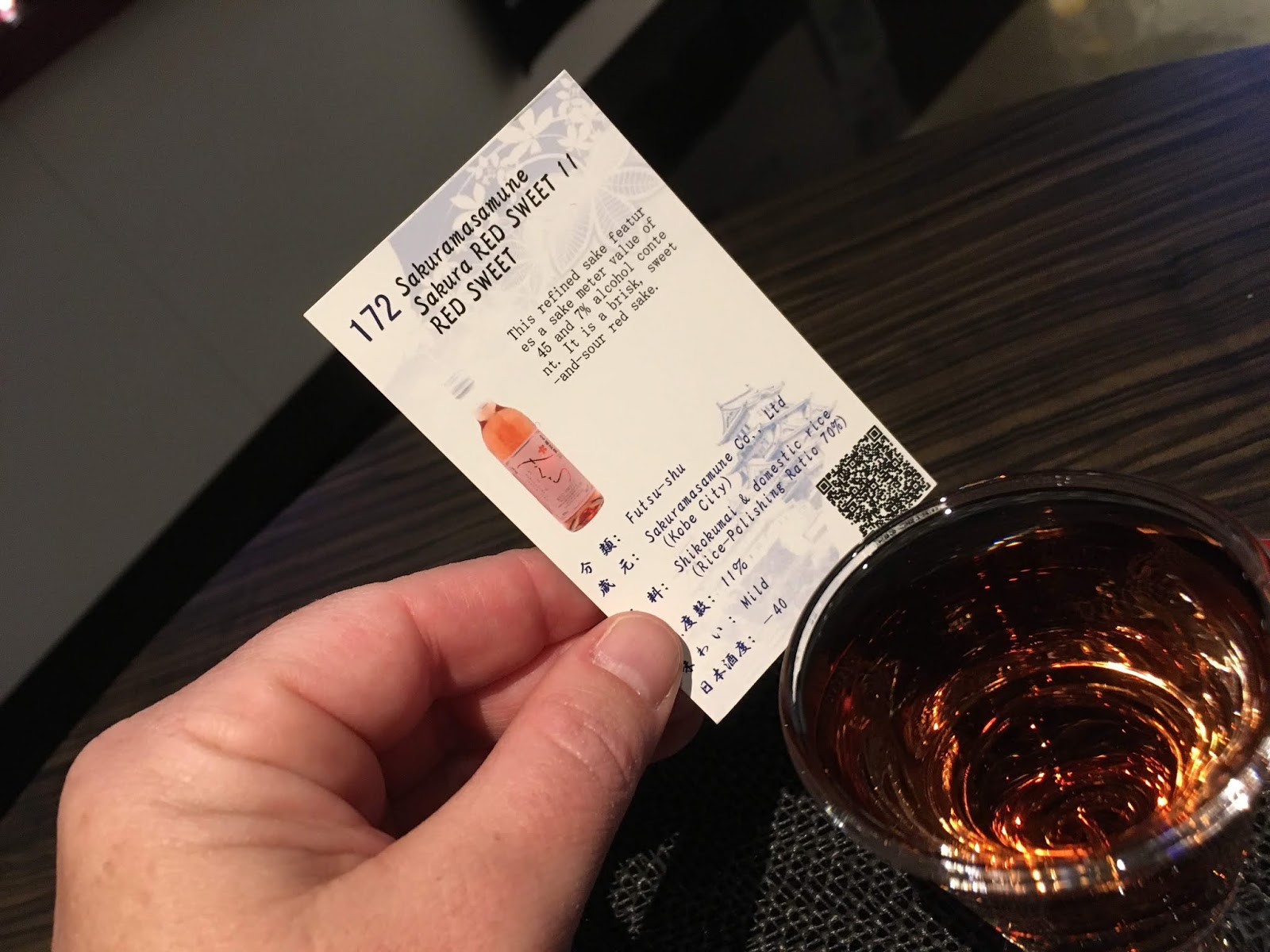
We also made sure to hit a sake tasting room. This one had hundreds of different ones to choose from, but the friendly shopkeeper did not speak English. Instead there was a multi-language touchscreen that listed the different sakes.


You made your choice and the machine spit out a card that you handed to the shopkeeper so that he knew which type of sake to pour for you. High-tech and clever!


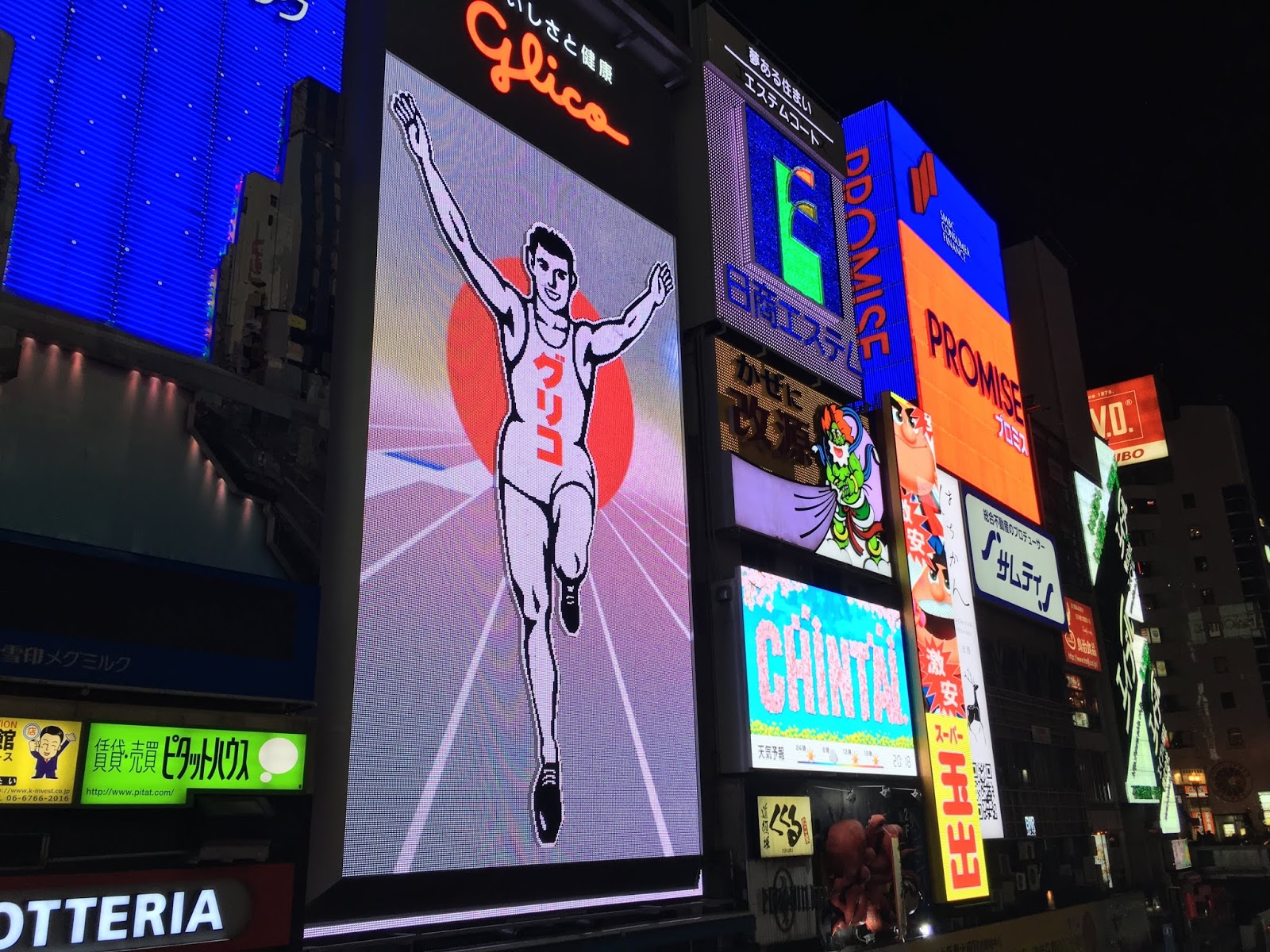
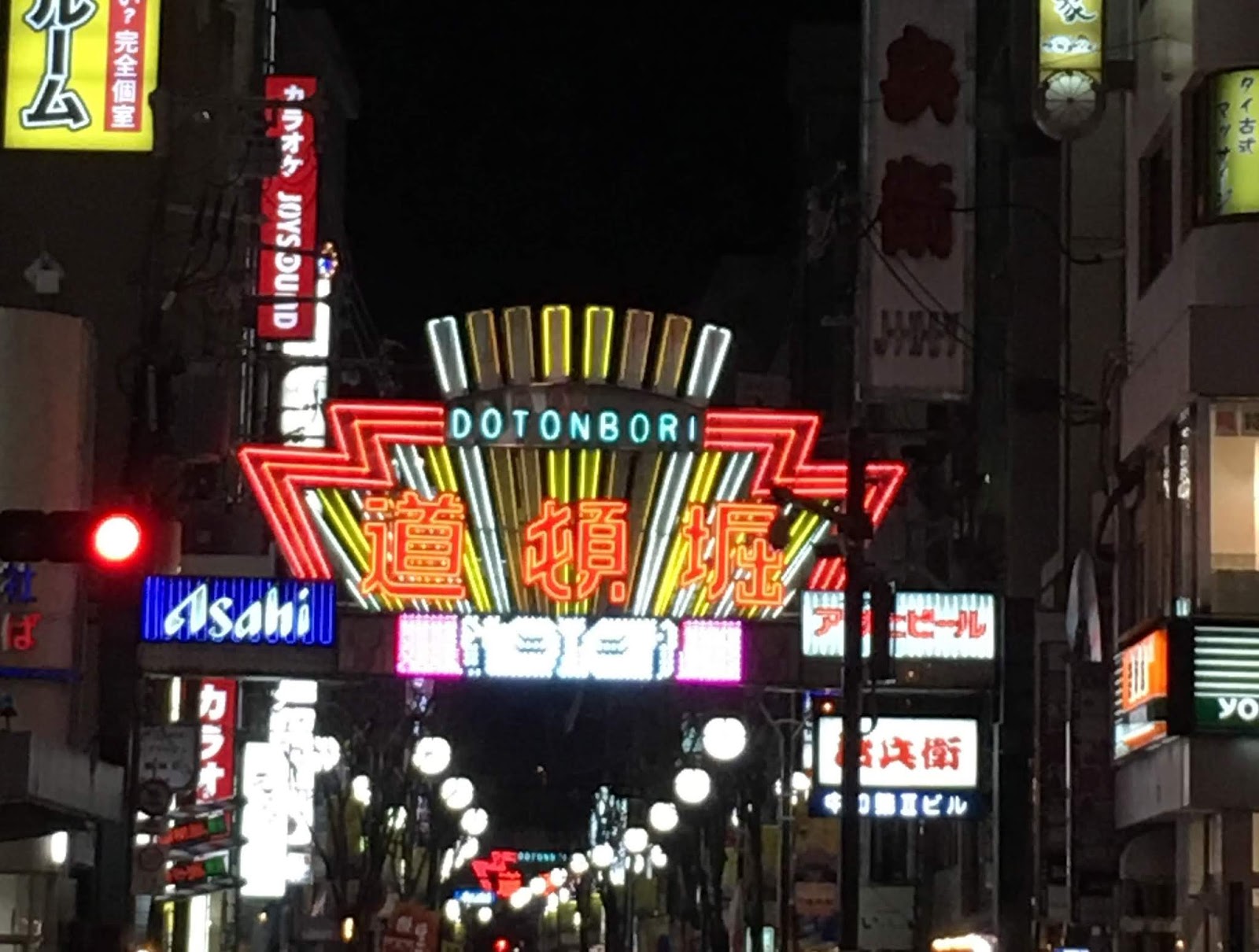
On our final night in Osaka, we took a stroll with about a thousand other tourists through the very crowded Dotonbori  area.


I was fascinated by the elaborate signs over the restaurants. Even without being able to read Japanese, it made it easy to tell what kind of food was being sold. For example, on the left is a takoyaki place and on the right is a place specializing in fugu (pufferfish with all the poison/toxic parts removed…hopefully).


Having already tried takoyaki and being too chicken to try the fugu, we opted to have what I thought would be a less-lethal dinner of okonomiyaki  (a savory pancake made with cabbage). If I had known better I would have just gone with the fugu since the okonomiyaki gave me a terrible case of food poisoning the next day. I blame the chef (who was actually me – you cook your own).


Wednesday, April 3, 2019

Japan - Hakone and views of Mount Fuji


From Yokohama it was on to Hakone. We had our first experience riding the famous Shinkansen “bullet” train. I have to say that, compared to air travel, Japan’s high-speed trains are a very pleasant way to get from point A to point B. Our seats had a USB charging station, large windows, and plenty of legroom. It did make me wish that we had more options for train travel in the US.


Hakone is a scenic mountain area that is known for its many different types of transportation. The Hakone “Loop” is a circular tourist route that includes a private railway, a cable car, a ropeway, and a sightseeing pirate ship.


The Ropeway was probably our favorite part of the loop. Suspended in the gondola, you go directly over the Odwakudani  volcanic area’s sulphur vents and hot springs. You can get off at the Odwakudani station and try a very popular “black Sulphur egg” – hard boiled eggs cooked in the hot spring. Supposedly, eating one adds seven years to your life, but the smell and thought of eating one wasn’t worth it to me! What was worth it, were the amazing views we had of Mount Fuji. We were very lucky to be there on a clear day; like Denali, Mount Fuji is often obscured by clouds.


We continued down the ropeway to Lake Ashinoko, where we picked up the overcrowded (and a bit overrated) Pirate Sightseeing cruise. It was a little bit too chilly to sit out on deck, so we headed inside to find a seat. There were so many tourists on our boat that there was nowhere to sit on the first leg. On the second leg, we found seats but not near a window, so it wasn’t much of a “sightseeing” cruise for us. I imagine when the weather is warmer, it’s a great way to see the beauty of the Lake Ashinoko area.


Our hotel (Hyatt Hakone) was spectacular, though. Our room was enormous and had pretty views of the mountain forest, there was a complimentary happy hour for all guests, and it had a traditional Japanese onsen bath house/spa. Plus, they gave us some sweet-looking pajamas to walk around in! Well, technically it’s called a yukata, and it’s not really pajamas but a traditional casual summer kimono. Many of the other guests wore theirs throughout the hotel, but we only wore them when we headed down to the onsen for an evening soak. A great way to unwind after a long day of sightseeing!


Tuesday, April 2, 2019

Japan - Yokosuka and Yokohama


When my sister and her family moved to Japan for a two-year assignment, Kevin and I began making plans to visit them and also see a bit of the country. We had a half-day layover in Tokyo a few years before, but we always knew we wanted to spend more time in Japan someday.  I flew out a week before Kevin, so that I could spend plenty of time with my sister and nephews. We explored the cute town of Yokosuka, had a very fun night karaoke-ing with her friends, and even made it up to Yokohama to visit the very beautiful Sankeien Gardens.


Sankeien Garden is a Japanese-style garden that has been open to the public for more than 100 years. The creator of the garden brought historic buildings from all over Japan – a three-story pagoda, daimyo residence, and several tea houses.  It is a peaceful and enchanting place to visit any time of year, but cherry blossom season had just begun and I was particularly enthralled by the delicate pink and white trees. Be forewarned, there will be lots and lots of photos of cherry blossoms in upcoming posts!


Once Kevin arrived, we headed up to Yokohama for a night to visit my friend Carrie and her family, who had been living there for several years. Carrie had suggested that we stay right near Chinatown, and we were so glad we did! Yokohama’s Chinatown is one of the largest in the world, and our hotel was one street away from a pedestrian area that was lively, colorful, and crowded with people sampling hot chestnuts, steamed buns, and all kinds of other Chinese street food.


Carrie took us on a great walking tour of the area – we visited Motomachi street which is a very charming shopping area with cute boutiques and high-end clothing shops. We also stopped in at the Ma Zhu Miao temple, which almost overwhelmed the senses with its colorfully painted gate and rich-smelling incense.


One of our favorite spots in Yokohama was Yamashita Park, with its spectacular flower gardens and views of the Port of Yokohama.


There were many people out and about enjoying the gorgeous weather and the beginning of Sakura (cherry blossom) season. These stairs were a popular photo spot for tourists and locals alike.


(I did warn you that there'd be lots of cherry blossom photos...)

Sunday, November 18, 2018

Hawaiʻi - Waikiki Beach and Oʻahu


There’s something about Hawaiʻi that keeps calling us back. In the past ten years we’ve been to the other main islands (Maui, Kauaʻi, and the Big Island of Hawaiʻi) so we thought this time we should check out Oʻahu. We booked a quick one-week trip through Costco to Waikiki Beach.

Duke Kahanamoku statue on Kuhio Beach

Kuhio Beach

We stayed at the Outrigger Waikiki Beach Resort, which was in a perfect location right on the beach and within walking distance to lots of great restaurants. Our balcony even had a (partial) ocean view. (We also had a full view of the balconies of the hotel next to us; it’s always interesting to look across while sipping a sundowner and see about a hundred other people staring back at you).


Our room was decorated in – what else? – a Hawaiʻian theme.


From the beach in front of the hotel, we had great views of Diamond Head, a huge volcanic cone that is one of Oʻahu’s most-recognizable landmarks.


The other great thing about the Outrigger beach resort is that they have a fantastic jazz venue on site, The Blue Note. We went to two shows here during our stay and it is a great place to see a live performance – there are only about 300 seats and all of them have a great view of the stage. Lots of big names perform here even though it’s a small venue because, hey, free trip to Hawaiʻi.


We rented a car for one day and drove the loop around the island, starting our morning at the USS Arizona Memorial in Pearl Harbor. The Park Service is currently repairing the dock at the Memorial, so we couldn’t disembark and see inside, but it was a very moving experience just to be there and reflect on the many sailors and Marines who lost their lives on December 7, 1941.


Our next stop was at Haleʻiwa Aliʻi Beach Park on the North Shore to watch the Van’s Triple Crown surf competition for an hour or so. The waves were huge and the surfers were just tiny specks in the blue sea, but the hilarious commentary over the loudspeakers filled us non-surfers in on every drop, cutback, and wipe out, and helped us make sense of what we were seeing.


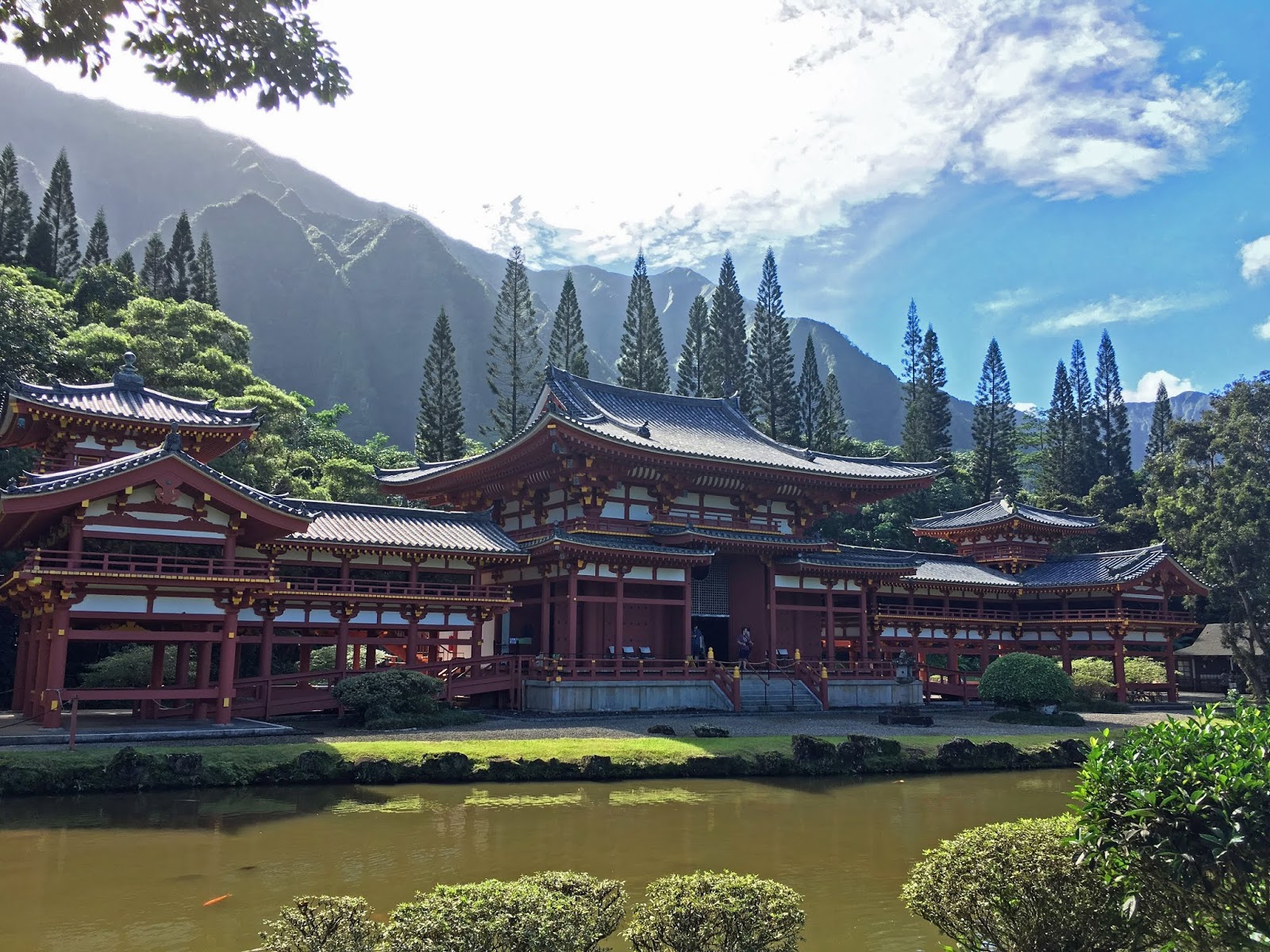
As we made our way to the eastern side of the island, we stopped at the Byodo-In Temple which is a half-size replica of Japanese temple of the same name. Since we plan on heading to Japan in spring 2019, this was an interesting place to visit – we plan on seeing lots of temples while we are in the Land of the Rising Sun.


Our last stop with the rental car was at Kualoa Regional Park, where we had great views of the Koʻolau Mountain Range, which has been the backdrop for many films and TV shows including Jurassic Park, Lost, and Magnum PI.


As I mentioned, we only rented a car for one day, but the local bus on Oʻahu is cheap and easy to use to get around. We took the bus into downtown Honolulu to check out the beautiful ʻIolani Palace, America’s only official royal palace and a National Historic Landmark. It was decorated in Monarchy-era bunting in honor of what would have been King Kalakaua’s 182nd birthday.


We were also able to take the bus to the world-famous snorkeling site at Hanalei Bay. It was packed with people, and it is so popular that they actually close the site down one day a week in order to try to let the coral recover from all the snorkelers. Unfortunately the coral still looked mostly bleached to us. Although the snorkeling was kind of a bust, at least there were gorgeous views of the bay from the trailhead.


Hawaiʻi is a food-lover’s paradise, and of course we had plenty of kahlua pork, poke, and loco moco on this trip. We also made sure to have at least one token meal that included SPAM.


Too. Much. SPAM. (And way too many pancakes, too!)

But something new that we tried on this trip were malasadas from Leonard’s Bakery. Malasadas are the Portuguese version of little jelly doughnuts, covered in sugar and filled with all kinds of sweet jams. We tried a variety of them – the guava flavor was my favorite.


This was Kevin’s second trip to Oʻahu and my first, but there was just so much to do and see on the island that I know we’ll be back again soon. Aloha!